
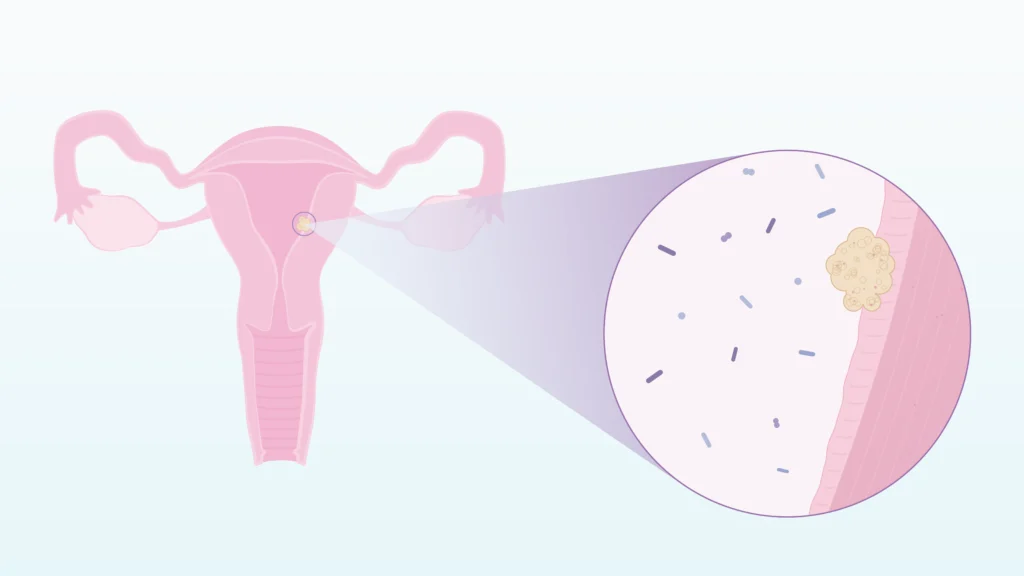
 Endometrial cancer is one of the most common gynecological cancers, particularly among women after menopause. Its development is associated with hormonal, metabolic, and genetic factors, but many questions remain about the mechanisms that contribute to its onset.
In recent years, researchers have begun investigating another potential factor: the microbiome, the community of microorganisms that inhabit different parts of our bodies and can interact with our cells.
Several studies have identified differences in bacterial communities between women with and without endometrial cancer. However, these findings remain difficult to interpret because studies have involved relatively small numbers of patients and used different analytical methods. As a result, it is still unclear whether these microbial changes may contribute to the development of the disease or arise as a consequence of changes caused by the tumor itself. This is the question that ENDO-BIOME, a Carlos Simon Foundation research project, aims to address by investigating the potential role of the endometrial microbiome in this disease.
The Endometrial Microbiome: What Do We Know So Far?
The endometrium is the tissue that lines the inside of the uterus. Unlike the vagina, which contains relatively abundant microbial communities, the endometrium contains extremely small amounts of bacterial material.
This makes it particularly difficult to study. Molecular techniques can detect bacterial DNA, but its presence does not necessarily indicate that living, active microorganisms are present in the tissue. Even minimal contamination during sample collection or analysis can affect the results. [1]
Despite these challenges, some studies have identified differences between women with endometrial cancer and those with benign conditions. These include a lower relative abundance of bacteria belonging to the genus Lactobacillus and a higher relative abundance of microorganisms such as Prevotella, Porphyromonas, and Anaerococcus. [2,3]
However, these findings have not been consistent across studies. Factors such as age, menopause, obesity, and tumor characteristics may also influence microbial communities.
To date, no specific microbial profile has been identified that can reliably distinguish women with endometrial cancer from those without the disease.
How Could Microorganisms Influence Tumor Development?
One of the main hypotheses is that certain microorganisms could alter the cellular environment of the endometrium through interactions with the immune system and inflammatory processes.
Inflammation is a natural response of the body, but when it persists over time, it can affect how tissues function. Some studies have associated the presence of certain bacteria with changes in the expression of inflammatory molecules in endometrial cancer samples. [4]
Researchers are also investigating whether these microorganisms can influence the activity of immune cells, such as macrophages, or affect the organization of endometrial tissue. Experiments using cell and animal models have provided findings that support these hypotheses, although they do not yet demonstrate that these mechanisms cause cancer in women. [5]
Another area of investigation involves a possible connection with the gut microbiome.
Certain intestinal bacteria produce enzymes involved in estrogen metabolism. Estrogens are hormones that regulate endometrial growth, and microbial activity could influence their availability and potentially affect how endometrial tissue responds to them. [6]
However, whether this mechanism plays a direct role in the development of endometrial cancer remains unknown.
What Questions Remain Unanswered?
Although published studies have identified possible associations, one fundamental question remains: Do changes in the microbiome contribute to an environment that favors cancer development, or does the disease itself alter bacterial communities?
Answering this question requires overcoming several limitations in current research.
First, researchers need to confirm that the bacterial signals detected genuinely originate from the endometrium rather than from sample contamination. They must also understand how these microorganisms interact with cells, immune responses, and individual patient characteristics.
Studying precancerous lesions, such as endometrial intraepithelial neoplasia, is also important to determine whether certain microbial signals are already present in these lesions before cancer is diagnosed.
A New Research Direction at the Carlos Simon Foundation
The research group led by Dr. Inmaculada Moreno at the Carlos Simon Foundation is building on its experience studying the endometrial microbiome to investigate its potential role in endometrial cancer.
The ENDO-BIOME project (Endometrial Microbiome and Endometrial Carcinogenesis) proposes comparing samples from benign endometrium, precancerous lesions, and endometrial cancer to determine whether reproducible microbial signals are associated with the disease.
Beyond identifying potential microorganisms, the study aims to understand how they may relate to inflammation, immune responses, and cellular changes in endometrial tissue. It will also investigate a possible connection between the gut microbiome, estrogen metabolism, and the endometrium.
To achieve this, the project proposes analyzing human samples with rigorous contamination controls, studying the most promising biological interactions in patient-derived models, and validating the findings in an independent group of patients.
Understanding these relationships could provide new insights into the biology of endometrial cancer and help assess potential future tools for its detection and characterization.
For now, the microbiome is not a validated tool for diagnosing or preventing this disease. Determining whether it plays an active role in cancer development or simply reflects changes already occurring in the tissue remains one of the central questions in this field of research.
References
[1] Molina NM, et al. Analysing endometrial microbiome: methodological considerations and recommendations for good practice. Hum Reprod. 2021;36(4):859-879. doi:10.1093/humrep/deab009
[2] Walther-Antonio MRS, et al. Potential contribution of the uterine microbiome in the development of endometrial cancer. Genome Med. 2016;8:122. doi:10.1186/s13073-016-0368-y
[3] Semertzidou A, et al. Microbial signatures and continuum in endometrial cancer and benign patients. Microbiome. 2024;12:118. doi:10.1186/s40168-024-01821-0
[4] Lu W, et al. Dysbiosis of the endometrial microbiota and its association with inflammatory cytokines in endometrial cancer. Int J Cancer. 2021;148(7):1708-1716. doi:10.1002/ijc.33428
[5] Ma Y, et al. Atopobium vaginae advances endometrial cancer growth via macrophage function in mouse models. iScience. 2025;28. doi:10.1016/j.isci.2025.113820
[6] Ervin SM, et al. Gut microbial beta-glucuronidases reactivate estrogens as components of the estrobolome. J Biol Chem. 2019;294(49):18586-18599. doi:10.1074/jbc.RA119.010950