
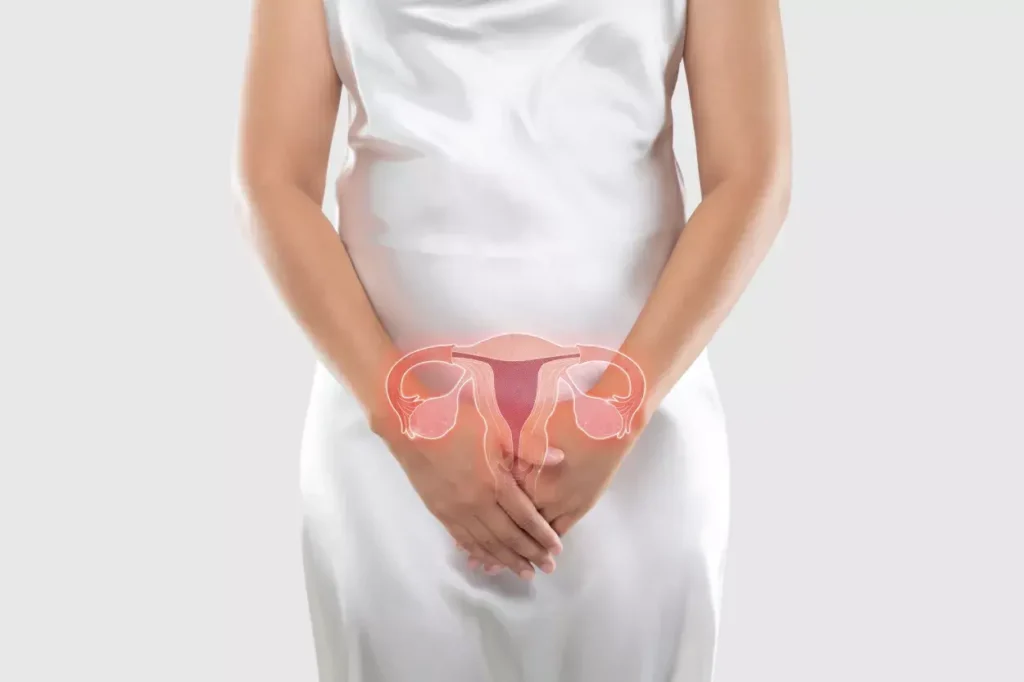
An innovative approach to endometrial regeneration
Asherman syndrome is a condition where scar tissue forms within the uterus, preventing a normal menstrual cycle and often leading to infertility. This scar tissue – also called adhesions – typically develops after surgical procedures like dilation and curettage but can also occur in response to other factors.
While surgery represents the traditional treatment approach, scar tissue often returns. Additionally, surgery does not address the underlying issue of damage to the endometrial lining, which is essential for pregnancy. As a result, researchers have explored new strategies to treat this condition using regenerative medicine.
The role of stem cells in endometrial regeneration
The endometrium, the lining of the uterus, has a remarkable regenerative capacity thanks to the stem cells residing in the basal layer of the endometrium, which play a crucial role in repairing the lining after each menstrual cycle. When the stem cell niche is damaged, normal endometrial tissue is replaced by scar tissue, leading to Asherman syndrome.
At the Carlos Simon Foundation, we demonstrated the therapeutic potential of autologous CD133+ bone marrow-derived stem cells in treating endometrial conditions like Asherman syndrome. These stem cells can regenerate damaged endometrial tissue, offering new hope for patients suffering from this condition.
Our approach: Regenerative therapy with CD133+ stem cells
Our team is finalizing the publication of results from our Phase II clinical trial to confirm the safety of CD133+ stem cells derived from bone marrow to treat Asherman syndrome. The main objective of this study is to gain deeper insight into the mechanisms of action of these stem cells and their effects on damaged endometrial tissue.
In this treatment, CD133+ stem cells are collected from the patient through a process called apheresis before being prepared in a specialized laboratory and reintroduced into the uterus through a catheter. This approach not only treats the symptoms of Asherman syndrome but also promotes the natural regeneration of the endometrium, restoring its function and promoting fertility. The therapy has been recognized by the EMA (European Medicines Agency, EMA/206895/2017) and the FDA (Food and Drug Administration, DRU-2017-6131), highlighting its potential in treating this condition.
Next steps
Preliminary results from our clinical trial have shown significant improvements in endometrial regeneration and restoration of fertility in patients with Asherman syndrome, both in moderate and severe cases.
In 2025, we plan to launch a Phase III clinical trial to evaluate the efficacy of this therapy thoroughly. With the data obtained, we aim to secure regulatory approval and launch the treatment in Europe by the end of 2025, followed by expansion into key markets such as the United States.