
Team

Carlos Simon is Professor of Obstetrics and Gynecology at the University of Valencia (Spain), Senior Lecturer at Harvard University, BIDMC (USA), and President of the Carlos Simon Foundation.
His main clinical and scientific interest has been to understand human embryo implantation, a critical process for species survival, considering the embryo, the maternal endometrium, and their cross-communication as crucial elements.
He discovered a transcriptomic signature of human endometrial receptivity through microarray technology (PMID: 20619403), later confirmed by single-cell RNA sequencing (PMID: 32929266). The clinical translation of this research resulted in a patent for the creation of the Endometrial Receptivity Analysis (ERA), enabling the diagnosis of a personalized implantation window in infertile patients. He provided evidence of a decidualization defect in the endometrium of women with severe preeclampsia, a pathology detectable at delivery and persisting for years (PMC: 5635883), and deciphered both the transcriptomic (PMC: 8553341) and multi-omic signatures of this defect (PMID: 39775038).
He demonstrated that the human uterine cavity is not sterile by revealing the existence of the endometrial microbiome (PMID: 27717732) and its functional implications in pregnancy (PMC: 8725275). He also discovered the existence of human endometrial stem cells and provided functional proof of concept. These findings led to the first advanced cell therapy for Asherman syndrome (PMID: 27005892) (EudraCT registration number: 2016-003975-23).
Regarding the human embryo, he developed a prediction model of aneuploidy in early embryo development through single-cell analysis (PMID: 26151134), elucidated the clinical impact of embryonic mosaicism (PMCID: PMC8715143), and discovered the origin and composition of cell-free DNA from the human embryo (PMID: 29471395; PMID: 32470458) and its clinical impact. His team derived, characterized, and registered ten human embryonic stem cell lines in the Spanish National Stem Cell Bank (PMID: 20018958), making possible the creation of its Valencia Node in 2004. Finally, he addressed maternal-embryo cross-communication (PMID: 29390102), discovering that maternal microRNAs may act as transcriptomic modifiers of the preimplantation embryo (PMID: 26395145).
His commitment to excellence in research is demonstrated by the publication of more than 550 peer-reviewed articles (PubMed). His work has received over 57,000 citations and he holds an h-index of 136 on Google Scholar (2025). He has edited 21 books in English, Spanish, and Portuguese, and supervised 42 doctoral theses. His career has been recognized with awards from several scientific societies and institutions, including the King Jaime I Award in Medical Research (2011), the ASRM Distinguished Research Award (2016), the Lilly Foundation Biomedical Research Award (2021), the Translational Medical Research Award from the Spanish Royal Academy of Medicine (2023), and the University-Society Award from the University of Valencia (2025).
His commitment to clinical excellence is reflected in his decisive role as a clinician and scientific director in establishing the clinical practice and research program of IVI from 1994 to 2018. As an inventor and entrepreneur, his research generated 17 patent applications that enabled the creation of Igenomix S.L. in 2011, where he was founder and Chief Scientific Officer, leading a scientific/medical team of 120 PhDs worldwide until its acquisition by Vitrolife in 2021, a biotechnology company dedicated to precision medicine in reproductive health through advanced genetic diagnostics, with an international presence across all continents.
Bibliography: https://www.ncbi.nlm.nih.gov
ResearcherID: G-2186-2014
Google Scholar: https://scholar.google.es
Personal Website: www.carlos-simon.com

Felipe Vilella, a Ph.D. in molecular biology, is the consolidated group leader of the Maternal Fetal Crosstalk Laboratory at INCLIVA/Carlos Simon Foundation. He performed two post-doctoral positions, one in the Clinical Science Centre of the MRC in London (UK) and the other in the Centro de Investigaciones Principe Felipe in Valencia (Spain). He was a visiting researcher for five years at Stanford University (USA) and two years at Harvard University (USA).
His main scientific interest focuses on understanding the communication mechanisms occurring between the mother and the embryo and elucidating how the mother can genetically modify the preimplantation embryo.
His research was the first to demonstrate the transmission of genetic information from the mother to the preimplantation embryo, demonstrating that the mother can modify the embryo transcriptomically and/or epigenetically, regardless of its genetic background (PMID: 26395145). He studied the effect of microRNAs and mitochondrial DNA secreted by endometrial cells on the embryo (PMID: 31665361; PMID: 29390102). He also focuses on understanding the implantation process, elucidating how endometrial cells communicate with each other at the single-cell level (PMID: 32929266).
He has published over 40 papers in peer-reviewed journals with an accumulated impact factor of 327.46. His papers have been cited 2,847 times with an average of 67.78 citations/paper. He has an H-Index of 26, has published 12 book chapters, and has directed 6 Ph.D. theses. He has participated in over 16 international projects, being an independent principal investigator in 11. He has participated as an invited speaker at over 80 international conferences.
ResearcherID: C-2970-2018

Xavier Santamaria, M.D., Ph.D., is a specialist in obstetrics and gynecology with a focus on reproductive medicine and translational research in women’s health.
He studied at the Faculty of Medicine of the University of Barcelona, completed his residency in Obstetrics and Gynecology at Hospital del Mar (Barcelona), earned his Ph.D. at the Universitat Autonoma de Barcelona, and pursued a postdoctoral fellowship in Reproductive Endocrinology and Infertility at Yale University (USA).
From 2012 to 2016, Dr. Santamaria served as Director of the International Department at IVI, leading its global expansion and the coordination of the Egg Bank. In parallel, he maintained clinical practice at IVI Barcelona until 2020.
Between 2013 and 2018, he also worked as a principal investigator at Vall Hebron Institut de Recerca (VHIR), driving projects in endometriosis and liquid biopsy.
In 2016, he joined Igenomix as part of Prof. Carlos Simon’s group, where he played a leading role in the development of innovative regenerative therapies, with a special focus on Asherman Syndrome and endometrial regeneration. Following this stage, he moved to the Carlos Simon Foundation, where he is currently vice president, continuing his scientific research.
His main clinical and scientific interest is to understand the regenerative capacity of the human endometrium and to design strategies to both regenerate this tissue and improve embryo implantation.
His group was the first to complete a clinical trial with human bone marrow–derived stem cells to treat Asherman Syndrome and endometrial atrophy (PMID 27005892), demonstrating the feasibility of this approach for endometrial pathologies. As a result of this work, CD133+ cells received orphan drug designation (ODD) from both the European Medicines Agency (EMA) and the Food and Drug Administration (FDA)—a historic milestone in gynecological research.
He has published 28 peer-reviewed scientific articles (H-index 15) and 13 book chapters, has been an invited speaker at more than 70 international conferences, and has received awards such as the Best Oral Presentation for Young Investigators Award (SRI 2009) and the Ky-Cha Award for Stem Cell Technologies from the American Society for Reproductive Medicine (ASRM) in 2023. Researchers from his group have also received the President’s Award from the SRI (2025) in recognition of the quality of their scientific work. He has additionally supervised three doctoral theses.
As an inventor on seven patent applications and co-founder of three innovative start-ups, Dr. Santamaria combines clinical vision and science with entrepreneurship, driving regenerative medicine from the laboratory to clinical practice.
ResearcherID: D-7856-2018

Inmaculada Moreno is a Senior Principal Investigator at the Carlos Simon Foundation for Research in Women’s Health, where she develops basic and translational research projects regarding the impact of the microbiome in human reproduction.
Her main scientific interest is understanding how microorganisms impact embryo implantation, pregnancy success, and women’s health in general.
She demonstrated the existence of the endometrial microbiota (PMID: 27717732) and reported an association between the microbiome and reproductive outcomes in infertile patients (PMID: 34980280). Furthermore, she studied the functional impact of bacteria present in the endometrium in reproductive failure (PMID: 31653041) and, for the first time, during early successful pregnancy (PMID: 32057732). Her research also focuses on improving diagnostic methods for chronic endometritis, a subclinical infection of the endometrium with adverse effects on fertility (PMID: 29477653), and searching for potential probiotics for endometrial health (PMID: 31058101).
Dr. Moreno has more than 15 years of professional experience in molecular microbiology and biochemistry. From 2015 to 2018, she collaborated with the Reproductive and Stem Cell Biology laboratory at Stanford University School of Medicine as a Visiting Scholar. She has been productive in basic and clinical research with over 40 published papers in peer-reviewed journals with an accumulated impact factor of 320.78. Her papers have been cited 2,294 times with an average of 52.13 citations/paper, and she has an H-Index of 24. She has published 5 invited book chapters, including the Encyclopedia of Reproduction, and has participated in over 100 international conferences.
ResearcherID: D-3955-2018
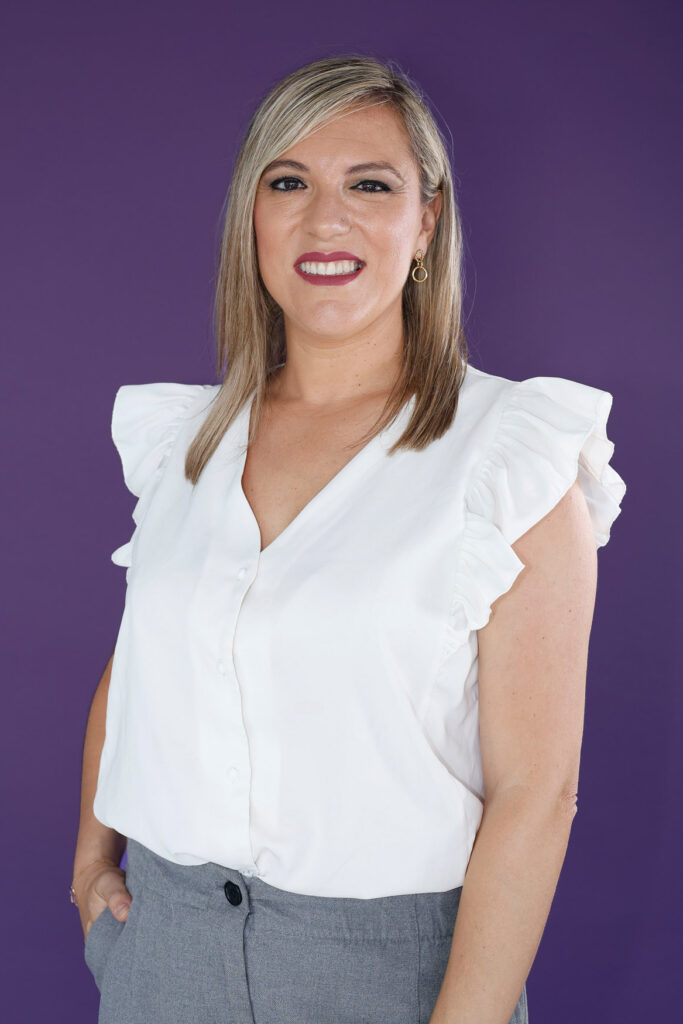
Dr. Garrido is a molecular biologist focusing on endometrial physiology, specifically decidualization, the first steps of embryo invasion and placentation (PMID: 21190976). She graduated in Biological Sciences (2007) and received her Ph.D. qualification in molecular biology (2012) from the University of Valencia (Spain).
Her post-doctoral training (2.5 years) was developed in the laboratory of Susan Fisher at UCSF (USA) before forming part of the INCLIVA Biomedical Research Institute in 2013. Her post-doctoral investigations allowed her to gain expertise in uterine contributions to pregnancy complications, mainly focusing on preeclampsia (PMID: 28923940; PMID: 34709177).
She has published more than 17 high-impact peer-reviewed publications in prestigious journals such as PNAS, eLife, Development, and the American Journal of Obstetrics & Gynecology (AJOG) and has participated in over 20 international conferences. She supervises medical students in their final projects, directs Ph.D. theses, and participates in national and international projects.
She is currently the Senior principal investigator in the R&D department at Carlos Simon Foundation and the scientific manager at iPremom Pregnancy HealthCare Diagnostics S.L. Her primary research focuses on uterine contributions to preeclampsia and main pregnancy complications for their early detection and the development of novel therapies.
ResearcherID: B-6551-2017

Dr. Aymara Mas is Senior Principal Investigator at the Carlos Simon Foundation and Miguel Servet Researcher (ISCIII) at the INCLIVA Health Research Institute, Valencia (Spain)
Her research focuses on understanding the factors contributing to the pathophysiology of benign and malignant gynecologic tumors, including smooth muscle tumors and uterine and ovarian cancer.
Dr. Mas performed an international post-doctoral fellowship for 2 years at Augusta University (Georgia, USA), primarily studying uterine disorders, completing her Ph.D. training at La Fe Health Research Institute, Valencia (Spain), with a Sara Borrel Grant (ISCIII).
Over the past 10 years, she has made significant contributions including the functional proof of concept for the existence of somatic stem cells (SSCs) in the human myometrium and uterine leiomyomas (PMID: 24890270) based on side population methods (PMID: 22633281) and specific biomarkers (PMID: 25989979; PMID: 28395335). She also collaborated with many groups to study the role of steroid hormone receptors (PMID: 27739139), signaling pathways (PMID: 30075150), and genetic (PMID: 25542836) and epigenetic alterations (PMID: 25922306) in the pathogenesis and growth of uterine leiomyomas, looking further into new approaches to improve the efficacy of gene therapy against these benign tumors (PMID: 27020169). She has also revealed, through integrative genomic and transcriptomic profiling, the differential molecular signature of uterine leiomyoma versus leiomyosarcoma tumors (PMID: 31121144; PMID: 35216305), giving rise to 2 patent applications.
Her commitment to research excellence has been demonstrated by an established record of 9 research projects (5 as principal investigator) and 30 basic and translational publications in peer-reviewed journals from an area of high relevance, such as female reproductive health, specifically in uterine leiomyomas. She has participated in national and international grants and has been internationally awarded by the Society of Reproductive Investigation (SRI) and the American Society of Reproductive Medicine (ASRM). She also guides Medicine Degree students in their final projects and Ph.D. students.
Nowadays, her team uses high-throughput sequencing technologies to identify molecular biomarkers associated with tumor growth and progression and develop predictive models that allow non-invasive therapeutic and preventive strategies.
ResearcherID: E-4409-2018